Sunday, 3 February 2013

Why Would I Want Alain de Botton to Help Me Think More About Sex??

Grey, nondescript cover to
convince us it's a Serious
Monograph
Alain de Botton and I are in an unhealthy love-hate cycle. It has lasted for many years, and every time I think I've come to the end of it, it just starts right back up again. Essentially it consists of the following: I buy or get given a de Botton book, start reading it, am temporarily overcome by how wise and lucid he seems, then gradually become frustrated with his smug French-yet-not-French pseudo-grandeur, and resolve, upon finishing the book, that I am done with him forever.

The bit of the cycle I hadn't identified until recently is the part where I forget that the cycle actually exists. Every time I start a new book of his, I kid myself that this time it will be different, that we can work through our disagreements like responsible adults. And so it was with an air of optimism that I succumbed to the 'School of Life' display in the Norrington Room at Blackwells in Oxford (a cardboard stand placed suggestively next to the philosophy section), picked up How to Think More About Sex by AdB himself, and spent the next half an hour finding two other books to reach '3 for 2' fulfilment. (One of them, by the way, was The Marriage Plot by Jeffrey Eugenides, which I'm rather enjoying.)

In his characteristically seductive way, de Botton begins by saying some things that need to be said, briefly satisfying the image we might have of the public philosopher. "It is rare to get through this life without feeling ... that we are somehow a bit odd about sex." Yes! my mind cried. Yes, that's true! Oh, AdB, keep going. Society's problems await your perspicacity! He points out, quite correctly, that we don't think much about sex as a puzzle any more, that the liberal age is, theoretically, one that has assimilated sex quite happily, despite its overwhelming tendency to shatter all steady, rational things, to meddle with the minds of the most educated, analytical individuals in truly shocking ways. We are falsely complacent about it.

And then it all starts to go wrong. Promising ideas -- that most of us find erotic arousal in things considered shameful by society -- are briefly discussed and then dropped, only to be contradicted later on by AdB's optimistic imaginings on what a pornography for an enlightened future might look like:
... based around such qualities as intelligence (showing people reading or wandering the stacks in libraries), kindness (people performing oral sex on one another with an air of sweetness and regard) or humility (people caught looking embarrassed, shy or self-conscious).
This sentence made me laugh out loud because of its naivety. If the erotic urge comes, as he suggests earlier on, from the breaking-down of formal conventions, the release of all the strictures we hold ourselves together with, then how could we be expected to find excitement in these utterly harmless, virtuous scenes?  One can't solve the problem of trying to integrate sex into the rest of life by 'persuading' people to find only laudable things erotic.

These utopian musings are pretty typical of AdB at his most broad-brushed and infuriating. (See Religion for Atheists.) In the same vein, he imagines a future in which all couples go to weekly therapy sessions to thrash out their disagreements minor and major. I can't really decide on the point of this bit. Does he really believe this possible for the future? What about the expense, in terms of both money and time? Doesn't he think couples would prefer to become better communicators without needing a third person to open the channels for them? Does he have some undeclared vested interest in The Rise of the Age of the Therapists?

Also, for someone so well-read, AdB doesn't half get simplistic. He argues that what we find attractive is a reflection of what we were lacking in our childhoods. He actually prints two photos of Scarlett Johansson and Natalie Portman and attempts some kind of analysis of why we might find Scarlett attractive ( her face suggests "just a little too much of a taste for excitement and melodrama") rather than Natalie ("the steely, practical resolve we detect in Ms Portman's forehead"). Hmmm. This is the intellectual equivalent of AdB leaving the toilet seat up. Perhaps, I thought in a spurt of silent sarcasm, this book should be renamed Pig Freudianism, and How Not To Use It.

Not that he uses a psychoanalytic approach all the way through, however. In the conclusion, he attempts to get evolutionist on yo' ass by arguing that all artistic activity, all desire to educate oneself or to design and produce beautiful clothes and food, is ultimately directed towards satisfying the sexual urge. We do all this to impress potential partners (i.e. the potential parent of our child).

Look at me, I'm practically Foucault!
Whether or not you believe this, it kind of scuppers large chunks of the rest of the book, especially the beginning, where he points out how many of us are essentially deviants. Fetishes, bestiality, incest and paedophilia fantasies (all of which exist and have been chronicled amongst emphatically 'normal' people) don't go any way towards ensuring the perpetuation of the species -- so why don't we all find them utterly alarming, rather than, for many, irresistibly exciting in the context of fantasy (or indeed reality)? If conventions exist to prevent someone meddling with the Furtherance of Mankind, then why are we desperate to break them all the time?

De Botton is sporadically convincing when he's discussing what sex 'is' in the modern world, though not consistently. But he always has to go too far and try to persuade us that not only can he see with startling clarity the problems of our age, he knows how to fix them, too. Now, if he's right, the biggest problem only lies in our failure to recognise him as the greatest Western thinker of the 21st century and to appoint him our lord and emperor. But, as you may have noticed, we haven't done this. Perhaps one day he'll realise that this is because the problems of mankind are real, knotty, impossible-to-get-hold-of problems, and that, if all the philosophers of the last three millennia can't solve them, it's unlikely that a milky-faced Swiss millionaire can either.

Wednesday, 9 January 2013

Taking a break

Thank you to everyone who's been following my blog so far. I'm delighted to say I've got a commission to be a guest blogger for Mslexia, a writing magazine, so you'll find me here for the next three months. My posts there will have a slightly different focus -- how you can use what you read as a way of critiquing and improving your writing -- but it's not impossible I'll find the odd couple of hours to post here as well.

Tuesday, 11 December 2012

"A Life I Had Never Dreamed Of": Jane Robinson's 'Bluestockings'

I bought Bluestockings, a study of the opening of university education to women, in perhaps the ideal location: Heffers bookshop in Cambridge. As I walked back to my car, I passed three or four Cambridge colleges, most of which had been male-only at their founding. Magdalene College, in fact, did not admit women until 1988 -- the last of any Oxbridge college; and even then, the decision resulted in the wearing of black armbands by its male undergraduates, and the college flag being flown at half-mast.

The University of Cambridge has perhaps the worst history in the UK when it comes to equal access. It did not allow women to be full members of the university until 1948 (the equivalent date was 1920 in Oxford, although there were other problems there). And there remain several single-sex Cambridge colleges: Newnham, Murray Edwards and Lucy Cavendish. Arguably, this now privileges women above men in terms of admission; and in Oxford, by contrast, all of the colleges are now mixed (St. Hilda's began to admit men in 2008).

Sexism and sex difference persist in other ways, too. I remember vividly while I was at Oxford the discussion of what was causing the 'finals gap' -- the fact that men tended to do better in final exams than women -- and what might be done to remedy it. I now work in a Cambridge college, in an office populated almost entirely by Oxbridge graduates, and entirely by highly intelligent women. The other day, one of my colleagues described how she was asked by an elderly-ish man what she'd got out of Cambridge: was it a first-class degree, a blue (playing for one of the university sports teams), or a husband? The first two items on the list are clearly worthwhile achievements for someone of either sex; but I just couldn't imagine anyone asking a man whether he'd managed to find a wife at university.

So I was coming to Bluestockings as a Cambridge resident, an Oxford graduate, a woman, and a feminist. This is, admittedly, possibly the best combination Jane Robinson could have asked for. I am her target audience, and I wasn't disappointed. The book is a vivid work of social history, covering the mid-1800s to 1939, and a testament to Robinson's method, which involved -- alongside traditional archival research -- meeting and corresponding with a huge number former 'undergraduettes' (or their relatives). Robinson peppers her historical narrative with scores of quotations from letters and interviews, all of which are fascinating and some of which are extremely entertaining or moving. I had tears in my eyes by page 4.

There are tales of extraordinary kindness: schoolteachers secretly funding their cleverest pupils through university when all other options failed; a stepladder specially bought for a diminutive natural sciences student to use in the labs in the 1880s (and consecrated to her memory by her supervisor after she left); the near-destitute, visionary mother who believed so strongly in her daughter's Oxford education that she nearly starved the rest of the family, investing in a future she could have hardly dared to hope would materialise -- and, in recognition of this sacrifice, being given a special seat next to the officials at her daughter's graduation. "'This ceremony means more to Mrs Pearson,' explained the Dean, 'than to anyone else here today. Of course she must have a good view.'" (Cue me sobbing into my sandwiches.)
'Dr. Syntax with a Blue Stocking Beauty' (1821)
by T. Rowlandson

These heartwarming anecdotes are balanced nicely with the darker side of the women's experiences: the rampant sexism (hardly surprising, but still appalling), the very real lack of prospects for female graduates for either employment or marriage, and the anxiety associated with being away from home and under pressure to do well. Robinson deals frankly with the fact that many undergraduettes did not enjoy university, and that amongst those who left early, the rate of suicide was disturbingly high. There is a particularly upsetting description (familiar, I am sure, to many freshers), of a young woman who "nearly died, she sa[id], of homesickness, and sat for hours at a time in her room anxiously wondering what she should be doing."

One particularly engaging thing about the book is the sense of recognition, the feeling that university education has in some ways hardly changed at all. Undergraduates still live in a 'bubble' during termtime. (There is a harrowing account of a girl who refused to let her father come and see her, being preoccupied with the forthcoming college dance, only for him to commit suicide a few days later.) They still develop intense friendships and crushes that are fuelled by the physical intimacy of a college or halls of residence. They still have essay crises and wacky tutors.

I was interested, of course, in the things that have changed for the better (access to courses, student freedoms, the food -- the latter possibly being a contentious point!), but equally struck by what hasn't changed, and perhaps should have, such as the use of college 'scouts' or 'bedders' in Oxbridge, employed to clean students' rooms, empty their bins, and even sometimes make their beds. It was understandable for young ladies from wealthy families to be unprepared for life on their own -- but surely it's not acceptable nowadays. It made me wonder about whether university can be infantilising to young people, both men and women, who ought to be moving up a level of responsibility, not cosseted and provided for in most of the things that independent adults have to do themselves. (Though I do wish I'd gone to more late-night cocoa parties when I was a student.)

The book itself does have some faults. Robinson appears to have had problems with structuring her material, resorting to a set of abstractly thematic chapter titles around which to group her anecdotes ('Working in Hope', 'Women's Sphere', 'Shadows', 'Breeding White Elephants' and so on). This doesn't always succeed. For instance, stories about sexual relationships between female students (and/or female tutors) appear in several different chapters before you get to a section explicitly focusing on it -- which is itself problematic, since it appears in the 'Shadows' chapter dealing with unpleasant experiences, yet includes several accounts of very loving, positive relationships between women as well as more abusive ones. The whole book jumps around frequently, which sometimes feels breathless and lively, but which does get rather frustrating after a while.

On the whole, though, the 218 pages of Bluestockings cover a lot of ground and is consistently amusing, moving and intelligent. It's well-indexed, and comes with thorough references, a bibliography and a timeline. Robinson ends her study in 1939, at the beginning of "the golden age of the bluestocking", so there is plenty of room for a sequel. And it would be welcome, at least to me: I tend to think almost all books written after about 1950 are too long, but I found myself wishing there were another 200 pages of this one. Perhaps I shall have to scratch that particular itch with my own creative efforts -- and if I do, Bluestockings will be one of the first places I look for ideas.

Sunday, 18 November 2012

The Master, Kermode and Mayo, and "cults"

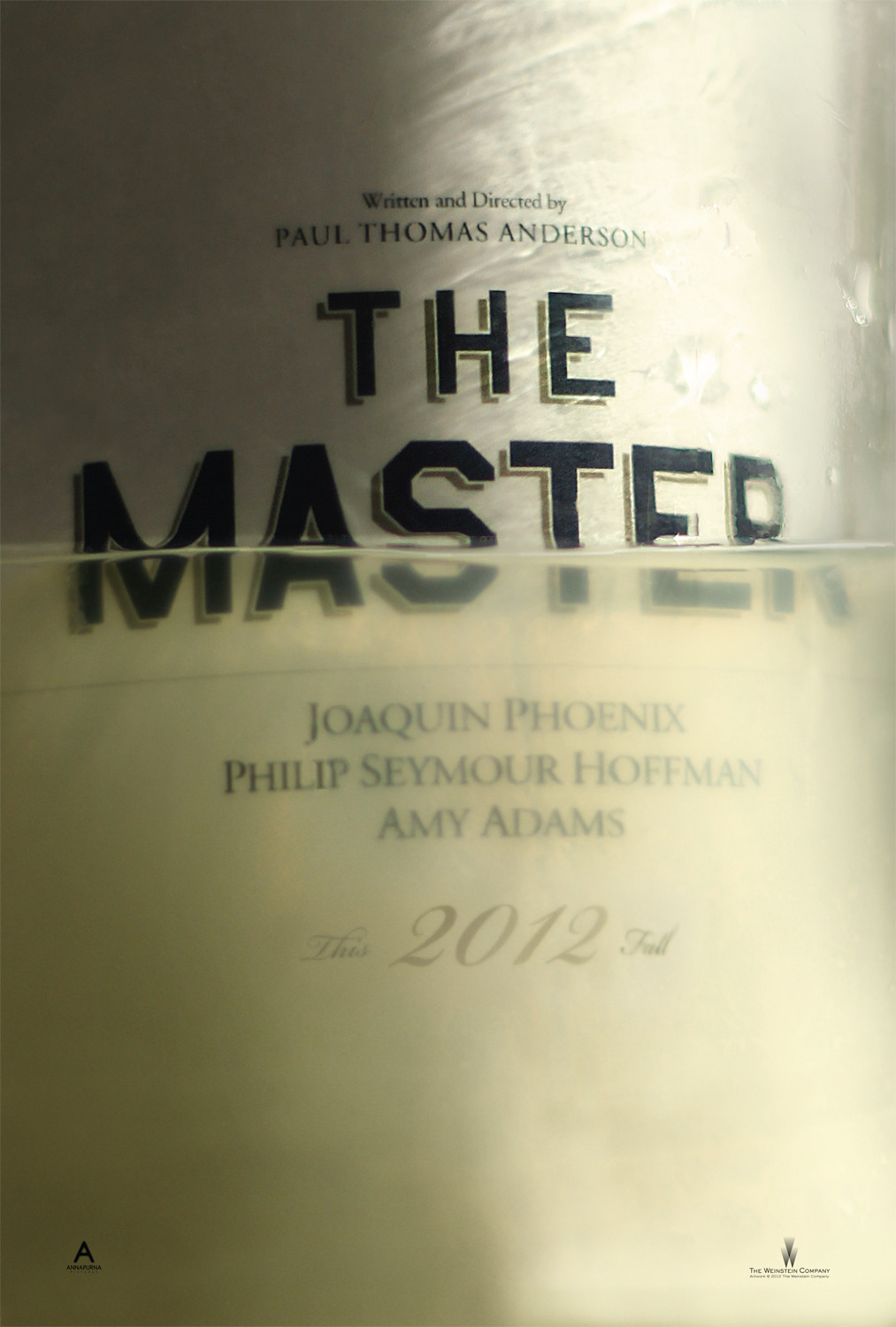
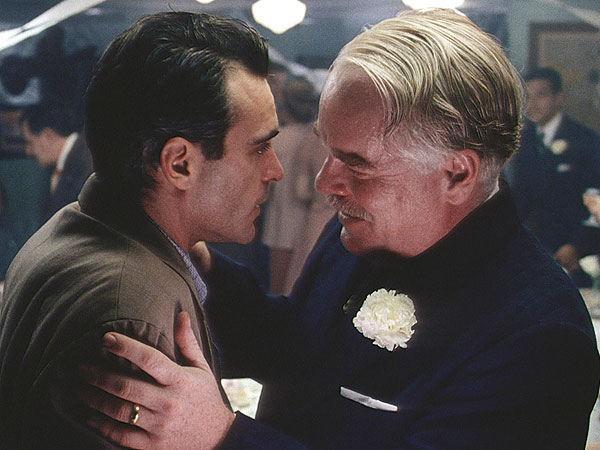
As a follow-up to the last post, which dealt with a novel about a "cult" (not my words), we went last night to see The Master, Paul Thomas Anderson's latest film. This is not a review of the film, but it was a slight vindication of a point I made in my previous post, that religion deserves to be treated with intelligent consideration. The "Master" of the title, a character called Lancaster Dodd, is substantially based on L. Ron Hubbard, the founder of Scientology -- arguably a far more damaging cult than that represented in The Revelations -- and yet, in an interview on Mark Kermode and Simon Mayo's show, Paul Thomas Anderson was quite adamant that the character, and the cult (named "The Cause"), do not have a wholly negative impact.

It's also interesting to consider that Kermode and Mayo, who review films on 5Live on a Friday afternoon, also have a "cult" following: people who write to the show with their own reviews usually try to show off by referencing the in-jokes and personal foibles of the two presenters (which the podcast amplifies even further). Kermode, who has a PhD in film studies (he's a massive horror fan), is affectionately referred to as "the good doctor". And, in a serendipitous cycle of themes, it turns out that both Kermode and Mayo are regular churchgoers.
Joaquin Phoenix and Philip
Seymour Hoffman in The Master

This is not to dispute the fact that, if the John Sweeney Panorama programme is anything to go by, Scientology does sound like it's fucking crazy. And of course there are different degrees of "cult"-ishness, Kermode and Mayo being at the harmless end of the spectrum. But it is ignorant and unhelpful to ignore the numbers of people who become involved in these movements, without exploring why they might want to do so. The Master is a beautiful, superbly-acted movie (though "low on plot", as Anderson admits), which reserves judgment in an admirable show of reflectiveness and restraint.

One last thing. I am currently reading (Samuel-Johnson prize shortlisted) The Old Ways by Robert MacFarlane, about which I shall no doubt be posting soon. It is brilliant. It's about how rational and non-rational views of landscapes -- specifically ancient paths and roads -- might interact and complement each other,  and MacFarlane is so wide-eyed and open-minded, as well as being a beautiful writer, that it is a joy to read.

Book-jacket publicity, and doing mental illness a disservice: Alex Preston's 'The Revelations'

One of my first thoughts after finishing The Revelations was that it has not been particularly well-served by the various taglines, blurb and quotations adorning its book-jacket, many of which make it out to be far less subtle and ambiguous than it really is.

For a start, there's the phrase "one weekend", which you can see in the image on the right. The book is essentially marketed as a psychological thriller (see dramatic lighting and mysteriously back-turned figures on the cover), and it tends towards this in the later stages, but it spends a chunky amount of time doing some quite admirable exposition, exploring who the "four friends" are and narrating some scenes in a lot of detail, before we get to the "weekend". In the thriller mode, it does end up being the weekend --  a spiritual retreat to a country house -- that is important, but in terms of the wider questions this book poses, I think the early stages are just as important.

The other thing that annoyed me is the use of the word "cult", which appears twice on the back of the book, both in the blurb and in a quotation from the Daily Mirror. I therefore expected to read a book about something like Scientology, or a live-in commune -- and, more importantly, I expected Preston's portrayal of it to be very much an exposé of its evils and the way it ruins people's lives. In fact, the "cult", which is called The Course, is an evangelical strain of Christianity seeking to convert people who are struggling to find meaning in life, and there are several instances in the book where it seems to do great good.

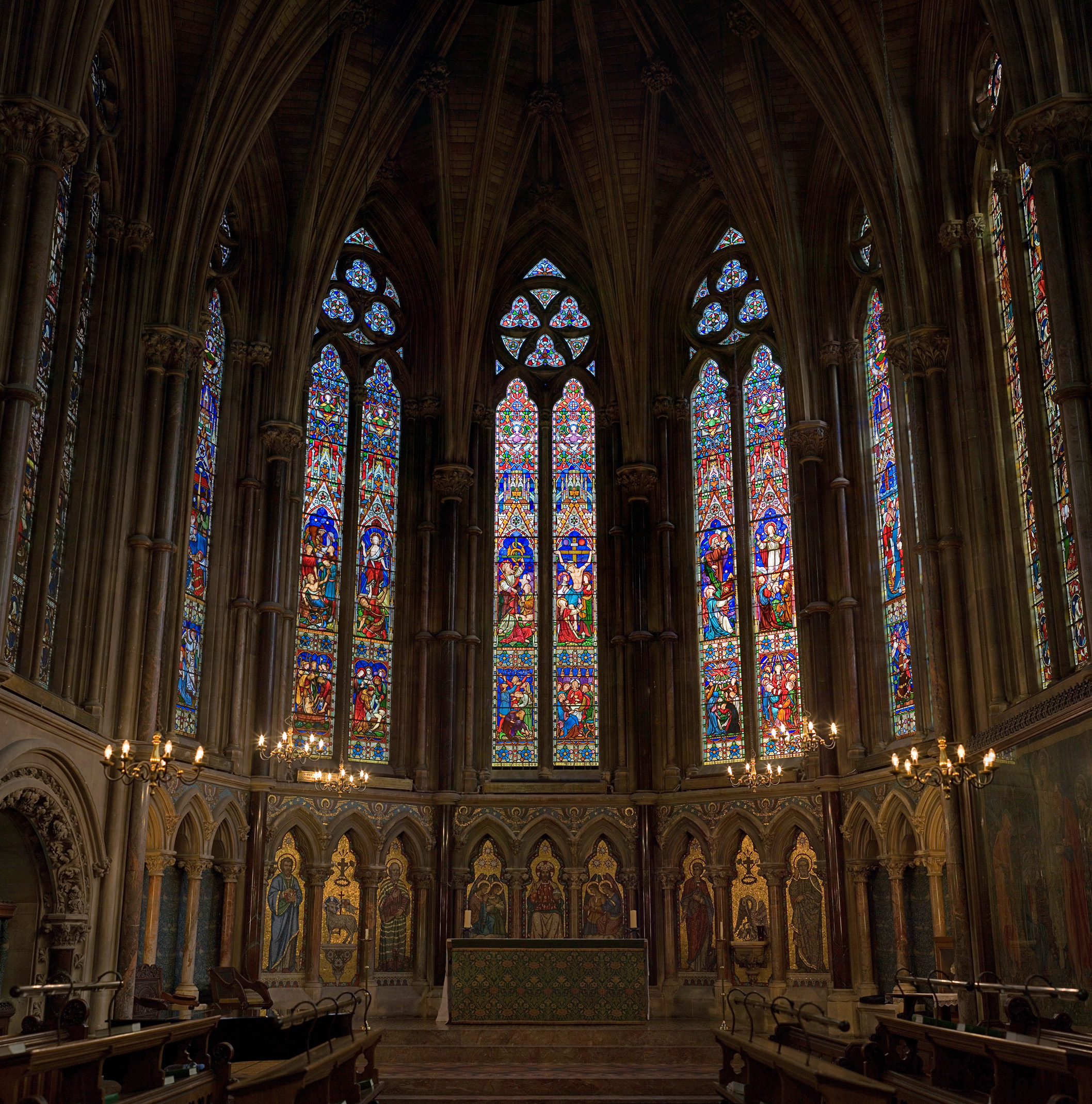
Exeter College Chapel, Oxford
I think this book is more intelligent than its packaging suggests because it acknowledges many truths that a more militant author wouldn't have done. There are many highly-educated, young, evangelical Christians who gain great strength from their religion. There are also many non-religious young people who do struggle to find meaning in their lives. And there are many people who are touched by experiences that they can only describe as spiritual, often when they would least expect it. Preston goes into some detail about one character's conversion being helped along by the beauty of a college chapel in the early evening, candlelit, filled with sacred choral music. Having experienced this particular sensation myself, my feeling is that Preston knows what he's talking about and understands that religion is more than about accepting or rejecting a set of values -- there is also "the mystery of faith", as the Christian liturgy expresses it, something beyond the purely rational and ethical that helps you accept that life is inherently complicated, imperfect and difficult.

I still haven't worked out what the author's personal position on this is, and obviously there's a debate to be had on whether it matters. In the acknowledgements, Preston refers to Karen Armstrong's The Case for God as "remarkably sane", and references some "bizarre spiritual excursions". It is tempting to view this as a closed-minded approach to something which has brought a lot of benefits for a lot of people, both intellectually and emotionally, but luckily the novel does make an attempt to explore these benefits properly.

My biggest problem with the book is the character of Lee, a (female) PhD student researching female mystics such as Julian of Norwich and Margery Kempe. There is a colloquial lit-crit term, a "Mary Sue", which is relevant here: a female character who is so perfect as to be two-dimensional, usually a wish-fulfilment fantasy for the (female) author. The term emerged from fan-fiction, but I have found several instances of where it is applicable to mainstream fiction, and this is sort of one of those cases.

Lee is not a Mary Sue in the traditional sense, but she certainly seems a fantasy to me compared to the other three characters. Mouse, Lee's closest friend, describes her thus:
Everyone who met her thought she was this wonderful, lively girl. Those eyes ... I'd see people look into her eyes and be transported. But behind it all she was struggling with terrible demons, unable to face the world.
This quotation exemplifies another problem with the book -- unrealistic, over-angsty dialogue -- but it was the characterisation of Lee that really irritated me. She is very skinny, highly intelligent, super-promiscuous, and above all deeply troubled. One (male) character is in love with her, another is hopelessly sexually fascinated by her.

Now, if I met Lee and she behaved the way she behaved in the book, I'd find her really bloody difficult. She is clearly very depressed, but no one seems to want to help her (unless sleeping with her/ going down on her/ secretly masturbating while she swims naked counts), and almost no one expects her to take responsibility for her actions (except, interestingly, David, the leader of the Course, and one other fairly minor character). The implication is that she can't be expected to behave properly or discuss her actions or seek help, because she's just got all these problems, you know, and, like, we just can't ever understand them, and one day she might kill herself, but hey, that's just who she is. It's deeply infantilising, and it romanticises mental illness in a way I find really distasteful.

'Universally Speaking' is the second
track on the album By the Way.
 Lee is an example of what could be described as an anti-Mary-Sue -- deeply flawed, but in a highly idealised way. Severely depressed people are not, and ought not to be, objects of sexual fascination, no matter how promiscuous they themselves are. They should be treated with respect and given support -- and that includes, to my mind, not simply ignoring selfish and destructive behaviour because it happens to cater to one's sexual desires. She reminds me of the girl described in the song 'Universally Speaking' by the Red Hot Chili Peppers -- damaged, yes, but desperately romantic and beautiful.

In short, whilst this is an intelligent book in many ways, I felt short-changed as a reader by being forced to regard this character in such a misty-eyed way. Lee represents the intellectual approach to religion in the novel, and I hoped to see a serious consideration of the fact that many, many highly intelligent people (including many academic professors) are religious. Instead we get a rather lazy association between visionaries and mental illness, and a view of the latter that sits uncomfortably and unconvincingly between science and sentimentality. Recommended if you're interested in the issue of modern religion -- but otherwise, probably not.

Thursday, 1 November 2012

Henry James -- a masterclass in plot recycling

When I last updated this blog, I was very slowly progressing through The Wings of the Dove by Henry James. Since then, I have found a job, passed the 80,000-word mark on my novel, and seen a woodcock for the first time -- I'm undecided on which of those is the most exciting -- and I've also finished reading Wings, about which you can read below.

WARNING: This post includes spoilers for both The Wings of the Dove and The Portrait of a Lady.


Although James published Wings (1902) twenty years or so after Portrait (1881), the two plots are extraordinarily similar. A greedy woman and her lover/fiancĂ© conspire for him to get close to, and eventually marry, a rich American heiress, in order that they might both have access to the money. In Portrait, the 'Lady' of the title, Isabel Archer, is the victim of this scheme, only realising exactly how cruelly she has been treated towards the end. Similarly, Milly Theale, the young American in Wings, upon realising that Merton Densher's attentions are motivated by money, not affection, experiences intense despair, "turn[s] her face to the wall," and succumbs to the illness which has threatened her life throughout the book.

James's preoccupation with the figure of a genial, intelligent, rich young woman suffering at the hands of others can be explained in biographical terms, especially as regards Wings. The character of Milly Theale is based on his young cousin, Minny Temple, who died of tuberculosis in her mid-twenties, in 1870. James was open about his interest in the immense potential that had been lost, and the strange fact that his affection for her increased after her death (as Merton Densher's does in the novel). The qualities of Isabel Archer and Milly Theale -- both are good-humoured and almost universally liked -- reflect the author's very personal feelings towards the young woman who inspired them.

It's interesting to reflect that, despite the similarities in the two characters and plotlines, it is only Isabel Archer, not Milly Theale as well, who has become the most famous and beloved of James's protagonists. And, despite my using the word 'recycling' in the title of this post, the two novels don't feel at all similar to read. This is partly because James's prose is extremely dense, though rich and expert, in Wings and comparatively light and fluid in Portrait -- but it is also because of a couple of key structural differences in the novel:

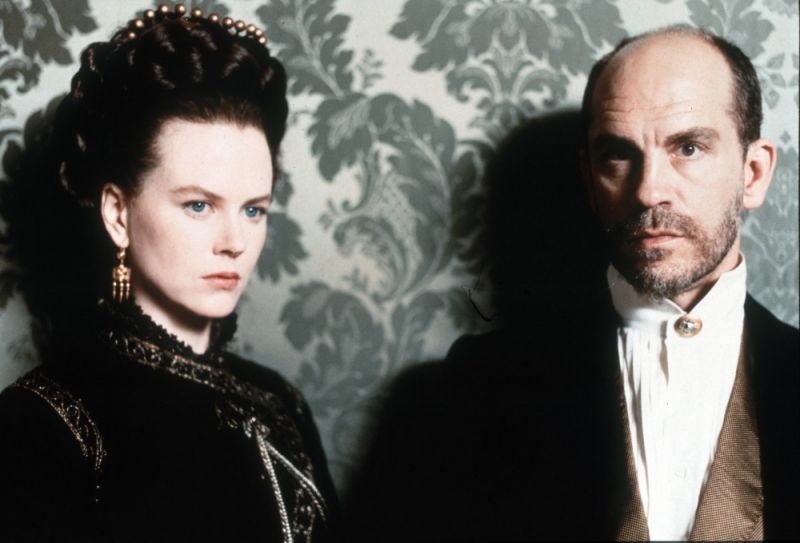
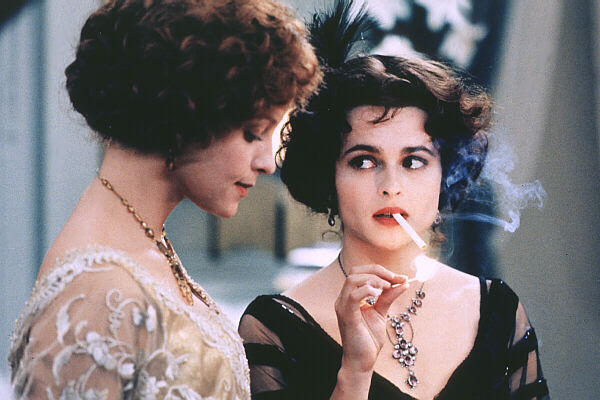
Nicole Kidman and John Malkovich 
1. Point of view. The Portrait of a Lady is very substantially from Isabel's point of view. We see her handling Caspar Goodwood, her suitor who keeps popping up from America, her increasing regard for Gilbert Osmond and Madame Merle, her unhappiness and disillusionment after her marriage, and, finally, the moment of anagnorisis (shocking recognition) when she realises that Osmond and Madame Merle are lovers. (She realises this, by the way, through the simple fact that Osmond is sitting whilst Madame Merle is standing -- a level of familiarity completely inappropriate to mere friends, and only possible with a truly intimate relationship. A stunning use of gesture.)

By contrast, Wings is mostly from the points of view of the couple, Merton Densher and Kate Croy, with only a few chapters entirely from Milly's. Towards the end of the novel, we follow Densher almost exclusively, which means we become more interested in his moral crisis than in Milly's cruel situation. Gilbert Osmond in Portrait has no such obvious crisis, and so the moral dynamics of Wings are far subtler.

Alison Elliott and Helen Bonham-
2. Proximity (or rather, the lack of it). Not only do we rarely see Milly Theale's point of view -- we are not even in the same city with her when she dies. Merton Densher, after Milly finds out about the plot to get her money -- which we don't see -- has one last, painful meeting with her in Venice -- which we don't see -- and returns to London, leaving Milly to die -- which we don't see. Her death is reported to Densher by other characters who have themselves merely received a telegram. James adds remove after remove to make Densher, and the reader, as detached from her death as possible. He challenges us to fill in the gaps, to imagine her despair.

For an author to kill off a main character is commonplace, sometimes even necessary, to turn up the emotional volume, to raise the stakes. (The deaths of increasingly important characters in the Harry Potter series is a particularly apt example.) But to keep the reader at such a frustrating distance from it, as James does, is phenomenally brave. James is choosing not to cash in on the tear-jerking moments, and implicitly argues that Densher's experiences are more interesting at this point. The difficulties he had in getting the book serialised, ironically, helped him here, enabling him to revise the book and structure it more freely. He chastises himself in the Preface for making Milly's background so scanty -- we know next to nothing about her life in America, for instance -- but the fact that we don't get to be in the room with her at her most crucial, devastating moments is surely deliberate.

3. Milly's illness. At the start of Portrait, Isabel Archer is healthy and happy and determined to have an interesting, full life. Milly takes a similar attitude, but it is given an edge of desperation by the fact that, as is slowly revealed, she knows that she is ill, and suspects that it might be very serious. The fact that the illness is never named, and that she only shows her weakness by her absence at various social engagements -- when she is present, she is vivacious and charming -- intensifies our sense of this threat through James's, and Milly's, teasing. The reader develops a creeping awareness that Milly will not find the happiness she deserves.

Isabel Archer, on the other hand, has no such doom hanging over her head. You feel that she could make a good decision, with enough perspicacity, and find a mode of living that would really suit her. But she doesn't. She marries Gilbert Osmond, and then stubbornly refuses to take any steps to lessen her own misery (until the ambiguous ending). She is complicit in her own downfall, whereas Milly makes no obvious false steps, and is simply the victim of others' schemes.

That this should lead to Isabel becoming such a cherished protagonist is surely natural, considering that she takes her place amongst Dorothea Brooke, Tess Durbeyfield, Elizabeth Bennet and so on, heroines who suffer long and hard (with or without a happy ending) because of a simple error of judgment. We like characters who make mistakes. Milly Theale is likeable, and her situation is tragic, but she is perhaps just too nice for us to get a handle on her -- compared to Merton Densher, who feels the weight of his own guilty profoundly by the end.


The Wings of the Dove takes a while to decide on its protagonist, but the sense of satisfaction I found at the end, when Densher rejects the money Milly has left him and dismisses the success of their scheme, proved to me that Henry James's choice to go back to the plot of Portrait, rearrange things a bit, and thus find a whole new area of fictive potential, is yet more evidence of a bold, masterful writer.

Friday, 19 October 2012

Reading Diary: Trollope, O'Connor, O'Brien, O'Connor again, Henry James

Since bombing my way through Death Comes to Pemberley I've been reading a rather electrifying cluster of other things ... which I will now proceed to summarise in blog-style, semi-bitesize fashion.


1. Anthony Trollope, The Warden

I had a few friends at university, and one boyfriend, who were big Trollope fans, but our tutor didn't get us to read any during the eight short weeks we 'did' Victorian literature, and, already lumbered with the bricks that were Bleak House and Middlemarch and Our Mutual Friend and so on, I left him well alone. I think it is a combination of having moved to the country and a dip back into Thomas Hardy that raised the idea of reading some Trollope in my mind, so I bought The Warden in a spanking new, very elegant Penguin edition with lovely stripes on the spine and the back. This is the first of the Barchester novels, and is also very short, so I thought it might be a good place to start.

The Warden follows the moral crisis of a quiet, cello-playing clergyman who, through generations of complacency and inflation, receives a huge income as the warden of a lodging house for poor, retired men of the parish. The sum was originally meant to give the warden a comfortable living and provide for the men's board, but whilst the warden's portion has increased, the men's daily allowance has remained the same. A young doctor, burning with the flames of righteousness, decides to stoke up the residents into signing a petition asking for their fair share, which throws the poor warden, Septimus Harding, into shock and disorientation.

Like Tolstoy and indeed Hardy, Trollope has such enormous compassion for nearly all his characters -- perhaps with the exception of Dr Grantly, the archdeacon -- that you can't help becoming rather passionate about what could be described as a dated Anglican quibble. Mr Harding tends to mime cello-playing behind his back during uncomfortable conversations, and, if things get too troubling, on his lapels -- much to the bewilderment of his interlocutors. This is a brilliant touch which encapsulates his preferment of music and emotional fulfilment rather than intellectual or public triumph. From this one gesture, you can see in an instant how the rest of the book will pan out.

Choosing an argument about the wealth of the Church, however, has larger echoes that it is important to remember when reading The Warden today. Henry VIII justified the dissolution of the monasteries partly by pointing to the vast and questionable incomes enjoyed by many abbots, and the privileges enjoyed by bishops, such as seats in the Lords, could form a modern parallel if someone were to take up the issue today. Which is not to say that Trollope is 'taking up' the issue as such. He is certainly exploring it, and also shining a light on the border between being in the right and appearing to be so -- Jeremy Hunt, take note -- but my lasting impression was not of the greed and self-satisfaction of the church; it was of the quiet anguish of the warden himself. The fact that the book is entitled The Warden, rather than, say, Those Avaricious Archdeacons, seems to indicate Trollope's intention here.


2. Short stories -- Frank O'Connor, Edna O'Brien, Flannery O'Connor.

Yes, the sudden cluster of 'O'...' in the author's names does signify a move towards Irish writing. I finally got around to reading Ulysses. A guy I was at university with was surprised I hadn't read it before -- and, frankly, so was I. But I finally did it. And it's BRILLIANT. (See the poll on your right -- if you can take a couple of seconds to vote before the end of October that would be fab!) And the gentleness, the recognisable 'Irishness' of it, pushed me to explore Irish writing a little more.

I bought a great book called The Granta Book of the Irish Short Story -- which I mentioned in my post about Colm Toibin -- which contains thirty-one stories, along with a great introduction by Anne Enright. 'The Mad Lomasneys' by Frank O'Connor and 'Sister Imelda' by Edna O'Brien are particularly brilliant, and I've since gone out and bought a collection of Frank O'Connor stories. They're gentle, uncomplicated, and then, suddenly, more heartbreaking than you might think it reasonable to expect from such a short form.

Edna O'Brien is the next on my list to explore. She has just published an autobiography, Country Girl, and thus has been in the press and on Open Book and so on. Her story 'Sister Imelda' seems to be one of her most famous, and captures exquisitely the desperation pupils have to please their teachers, and what happens if the teacher finds herself a little too keen to be pleased. "I looked into her eyes, which seemed fathomless, and saw that she was willing me to be calm and obliging me to be master of my fears, and I little knew that one day she would have to do the same as regards the swoop of my feelings for her." Without the word "swoop," this sentence would be unremarkable -- with it, it's stunning.

Flannery O'Connor -- as you might have been muttering indignantly to yourself -- was not Irish, but was born in Georgia, USA, in 1925, and died there of lupus at the age of 39. The introduction to her Complete Stories, by her publisher Robert Giroux, paints her as an extraordinarily humble, painstaking writer, but one who knew exactly what she was trying to do -- a conviction strengthened by her Christian faith. Her stories are extremely sharp and tough, and Evelyn Waugh is reported to have said, when sent the proofs of her first story collection, "If these stories are in fact the work of a young lady, they are indeed remarkable." Whether or not you'd expect this level gaze, frequently directed at men and their pretensions and prejudices, from a female writer (if you need to be angry today, go here), I think it's fair to say you might not expect it from a writer in her early twenties, as O'Connor was when she wrote, say, 'The Geranium'. Her precocity was really exceptional.


3. Henry James, The Wings of the Dove

My experience of Henry James so far had only really encompassed The Turn of the Screw, Daisy Miller and The Portrait of a Lady. But I reread the latter earlier this year, and was struck with how lucidly and civilly and minutely he dissects the relationships between his characters, even two acquaintances striking up a conversation in a drawing room, tracing who seizes tiny advantages and triumphs over the other.

I chose The Wings of the Dove for a couple of very banal reasons. The first is that I've somehow ended up with two copies of it, so it kept thrusting itself into my field of vision -- a bit like a painting whose eyes follow you around the room. Secondly, one edition of it is a lovely Penguin classics copy -- the expensive black ones, not the cheap beige/green ones, which has a very nice font in a good size. I'm happy to admit to being susceptible to print size as a consideration given how much reading I do.

And I'm glad I gave myself a break on that score, because Wings is really quite dense and tough-going in many places. It was published nearly 20 years after The Portrait of a Lady, and James has become even more unremittingly abstract in his descriptions of relationships. Check out this passage, from the very first chapter, on the subject of Kate Croy's relationship with her father:

Yet if there was much she neither knew nor dreamed of it passed between them at this very moment that he was quite familiar with himself as the subject of such quandaries. If he recognized his younger daughter's happy aspect as a tangible value, he had from the first still more exactly appraised every point of his own. The great wonder was not that in spite of everything these points had helped him; the great wonder was that they hadn't helped him more. However, it was, to its eternal recurrent tune, helping him all the while; her drop into patience with him showed how it was helping him at this moment.

It's the kind of writing that rewards slow, thoughtful reading. Once you've got your head round what the hell he's talking about, it's brilliant. But slow really does mean slow -- no eyeslip, no skimming, none of the normal approaches I take with easier stuff. This is not, I admit, a speed I like very much, because I like to feel the thickness of the pages increase in my left hand and decrease in my right hand as I get further into a book. (This is one reason why ebooks don't do it for me.) But it makes more and more sense to me these days to slow down, to commit to writers who have clearly pumped so much time and brainpower into their work that to read it at pretty much any speed feels ungenerous. Sitting and staring at the neat ranks of books I intend to read very soon doesn't help me remember that the main thing is the actual reading of the books -- but Henry James does.


Running my eye back up the pictures of books, this does look like an advert for Penguin -- but they are on a seemingly eternal roll with their book designs, and their fonts have always been gorgeous, so if I've got the choice, it's Penguin almost every time. Other publishers are available. (But sometimes they might as well not be.)